Kerala a Quantum Century Exhibition Recognized by UNESCO
UNESCO has praised the Quantum Century Exhibition held in Kerala as the most participatory and longest-running event among various international programs taking place during the International Year of Quantum Science. Initial reports have assessed the exhibition, with the UNESCO International Year of Quantum Science and Technology (IYQ) team noting that over 20,000 high school, higher secondary, college, research students, teachers, and the public have attended the exhibition in its first three locations. This number is expected to increase significantly as the exhibition continues across the remaining eight locations.
According to a United Nations declaration, 2025 will be celebrated as the International Year of Quantum Science and Technology globally, with events taking place in over a hundred countries. Many of these include lectures, classes, seminars, and exhibitions centered in one locale. Kerala is uniquely celebrating the Quantum Century on such a grand scale.
In line with the Quantum Year, the Kerala Science Literature Society and Science Portal Lucca, in cooperation with various institutions of higher education and universities in Kerala, have organized several events over the past few months. The main event is the Quantum Exhibition, which has been organized by the Science in Society (C-SiS) center of KUAS. The society is organizing events across different districts to promote public participation.
The exhibition commenced on November 7, 2015, and will continue until February 28, 2026, spanning 11 districts. It was inaugurated at the Kochi Science and Technology University by Dr. R. Bindu, the Minister of Higher Education. After touring TKM College in Kollam and St. Thomas College in Kottayam, the exhibition has now arrived in Alappuzha. It will take place at St. Michael’s College in Cherthala from December 11 to 15, followed by the Malabar Christian College in Kozhikode (December 26 – 31), Nehru College in Kanjangad, Kasaragod (January 4 – 9), VK Krishna Menon Government Women’s College in Kannur (January 12 – 17), St. Mary’s College in Sultan Bathery, Wayanad (January 21 – 25), Government College in Malappuram (January 29 – February 4), and finally concluding with a six-day exhibition at the Government Women’s College in Thiruvananthapuram from February 19 – 24.
Exhibition Features
Quantum science has opened the door to understanding the micro-world, unraveling many cosmic mysteries. It lies at the heart of various groundbreaking technologies from the transistors and lasers that have transformed the world to the unfolding potential of quantum computers.
Exhibits and models will illustrate fundamental concepts taught from high school, including the periodic table, atomic structure, orbital theory, subatomic particles, semiconductors, as well as quantum phenomena and technologies such as fluorescence, superfluidity, and superconductivity. Everything will be presented in a manner that is easily understandable for students and the general public.
Visitors will witness many previously unseen items, including those related to the ‚Raman Effect‘ discovered by C.V. Raman, along with simulations, virtual reality, lasers, and spherical projection technology utilized throughout the exhibition. Interactive experiments, installations, models, panels, and competitions will also be present. Each location will host science talks, discussions, book releases, and other related programs in the days leading up to the exhibition.
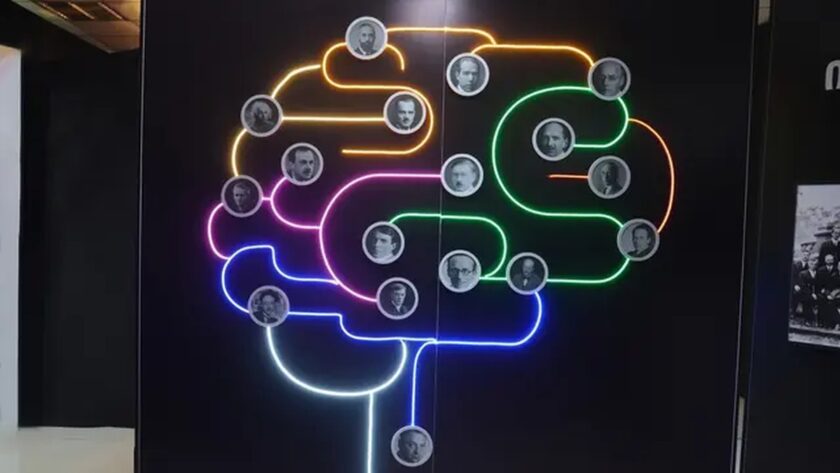
Artist Sreeja Palla’s sculptures introduce notable Indian women scientists like T.K. Radha and Bib Chaudhuri, while special artworks by Yadunath Aaru highlight the Indian contributions to quantum science. Other artistic works include pieces by Justin Joseph featuring Einstein and Marie Curie. Moreover, Shrodinger’s thought experiment with the cat will also be showcased. Trained science communicators will be available to explain various concepts.
Schools can register in advance to attend the exhibition at their district center via the website. The first 60 registered schools at each venue can accommodate up to a hundred students for the visit.
Political Implications of the Exhibition
The Minister of Higher Education, Dr. R. Bindu, emphasized that this exhibition aims to democratize quantum science, reflecting on how significant scientific contributions have been monopolized by profit-driven capitalist structures. The exhibition seeks to expose the limitless possibilities of quantum science that may otherwise become accessible to a few. This aligns with the United Nations‘ intention to observe the Quantum Century and its message resonates through this exhibition.
While quantum science has the potential to radically transform human life, there remains a significant knowledge gap among the public. The division between those who know about quantum science and those who do not could lead to greater social disparities in the future. This, indeed, highlights the political significance of the centennial celebrations.
Quantum technology has become a focal point in the global political and economic competition between the U.S., China, and the European Union. Concerns abound that excessive investments and fierce competition for dominance may lead to a „quantum divide,“ where only a select few nations control advanced quantum technologies, leaving others as mere consumers, thus creating technological disparities worldwide.
The implications for economic growth and security in the future hinge on the importance of quantum science. Governments recognize the critical role of quantum technology in cryptography, sensing, and simulations which are vital for defense and intelligence sectors. These imminent developments in quantum computing raise apprehensions about the potential theft of private data, driving nations to seek dominance in these technologies. However, the current governmental approach to basic research and science education may hinder India’s competitiveness in this global race.
There exists a risk of quantum science being exploited for pseudoscientific promotion, evidenced by works like ‚The Tao of Physics‘ that risk confusing rather than enlightening. With corporate interests often dominating narratives about science, vigilance against such misapplications is essential.
This exhibition can be viewed as a foundation for the political struggle against such problems while also emphasizing the necessity for robust science education and advocacy for adequate representation across various domains. In the context of Kerala’s aspirations toward creating a knowledge-based society, every effort and initiative toward this goal bears immense political significance. In this regard, the Quantum Century Science Exhibition stands as a new form of resistance against imperialist capitalist forces. It is expected to generate momentum for more substantial follow-up efforts in collaboration with various public organizations and academic communities.
Why Quantum Science?
Science traditionally dealt with phenomena understandable through human senses and instruments. However, as inquiries expanded into the realms of the micro-world and exceptional phenomena, many elements eluded traditional explanations. The behaviors of matter, especially elements, presented inconsistencies that called for new theories and paradigms, giving rise to what we now call quantum science.
The development of quantum physics originated in the realm of classical physics, referred to as quantum mechanics. The realization that energy emitted by matter is quantized rather than continuous marked the beginning of this development. Max Planck introduced the idea in December 1900, suggesting that energy exists in discrete packets, which he named ‚quanta‘. This subsequently led to numerous debates and new conceptual frameworks that altered the scientific landscape, culminating in ‚quantum mechanics‘ as an accepted discipline.
Utilizing Planck’s quantum concept, Einstein explained the photoelectric effect, proposing the dual nature of light, which behaves both like a wave and a particle. Prominent scientists, including Niels Bohr, used quantum ideas to elucidate atomic behavior and the resulting spectrum.
However, these concepts sparked new questions, such as the dual behavior of matter, where electrons and protons within atoms act as both waves and particles. Werner Heisenberg introduced the uncertainty principle, establishing limits on simultaneously measuring the position and momentum of particles. These advancements prompted significant shifts in scientific understanding.
Erwin Schrödinger formulated a comprehensive equation in 1925 that accounted for various properties of particles, giving rise to ‚wave mechanics.‘ Concurrently, Heisenberg introduced matrix mechanics to delineate atomic interactions. The exclusion principle, proposed by Wolfgang Pauli, contributed to accounting for periodic tables and stellar evolution, marking a revolutionary phase in quantum science in 1925. This milestone led UNESCO to declare 2025 as the Quantum Century.
Quantum theory has since enabled explanations of various cosmic phenomena previously unfathomable. Gradually, these theories expanded to other scientific domains and technologies, leading to the emergence of fields like quantum chemistry and quantum biology, which have transformed human life through numerous vital discoveries.
Examples include energy-efficient LED lights, solar panels, electronic devices like televisions and smartphones, MRI and PET scans in medicine, GPS systems, electron microscopes, and cutting-edge tools for exploring cosmic history and evolution. Quantum technologies such as quantum computing, cryptography, teleportation, and sensing are on the horizon, heralded as the future of science.
This branch of science offers answers to numerous unanswered questions, such as photosynthesis, migratory navigation in birds, and olfaction. Over the years, quantum science has received multiple Nobel prizes, including the only Nobel awarded to India, which was conferred upon C.V. Raman for his contributions to quantum science.